Variations in Regional Compliance Standards Affecting Entry Acceptance in Nationwide Draws
Taylor Hughes · Jul 1, 2026
Variations in Regional Compliance Standards Affecting Entry Acceptance in Nationwide Draws
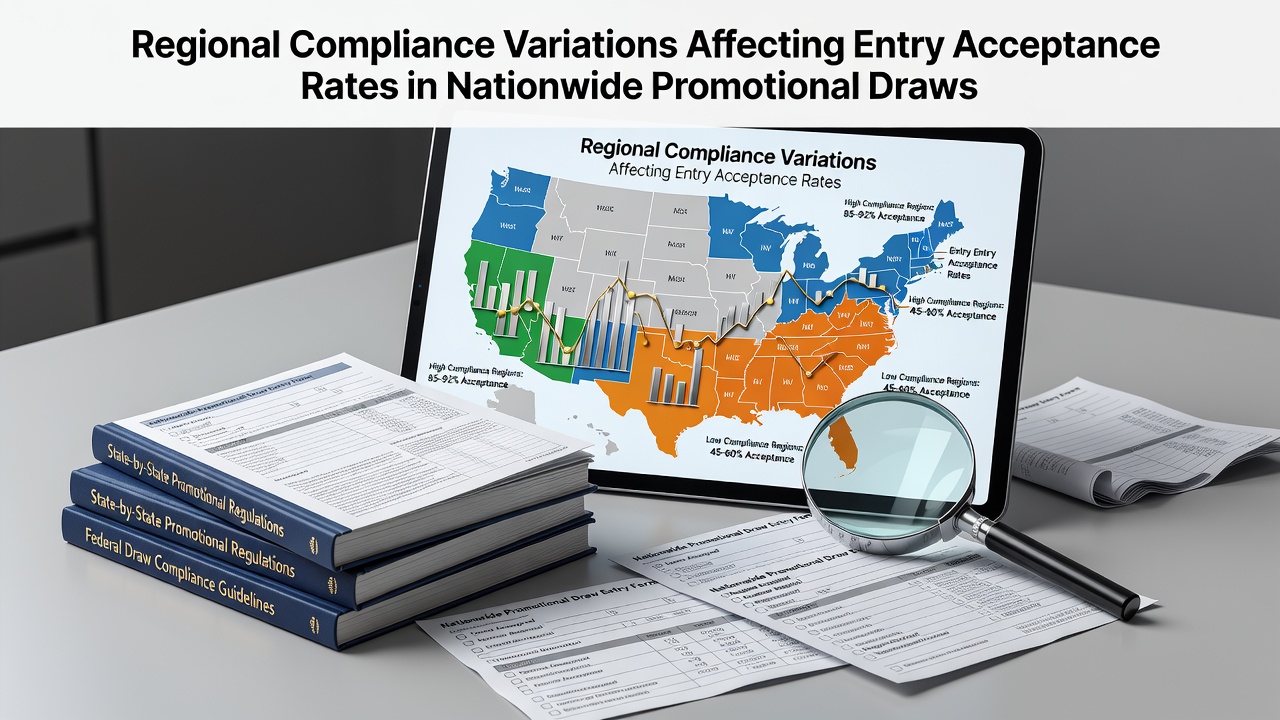
Regional compliance variations create distinct hurdles for participants in nationwide promotional draws, where entry acceptance hinges on local rules that differ from one jurisdiction to the next, and these differences have grown more pronounced as organizers expand multi-state campaigns. Data from regulatory filings shows that acceptance rates fluctuate based on factors like residency verification, age thresholds, and disclosure requirements that states enforce independently, which means an entry valid in one area might face rejection elsewhere even when the same promotion runs simultaneously across borders.
Key Differences in State-Level Requirements
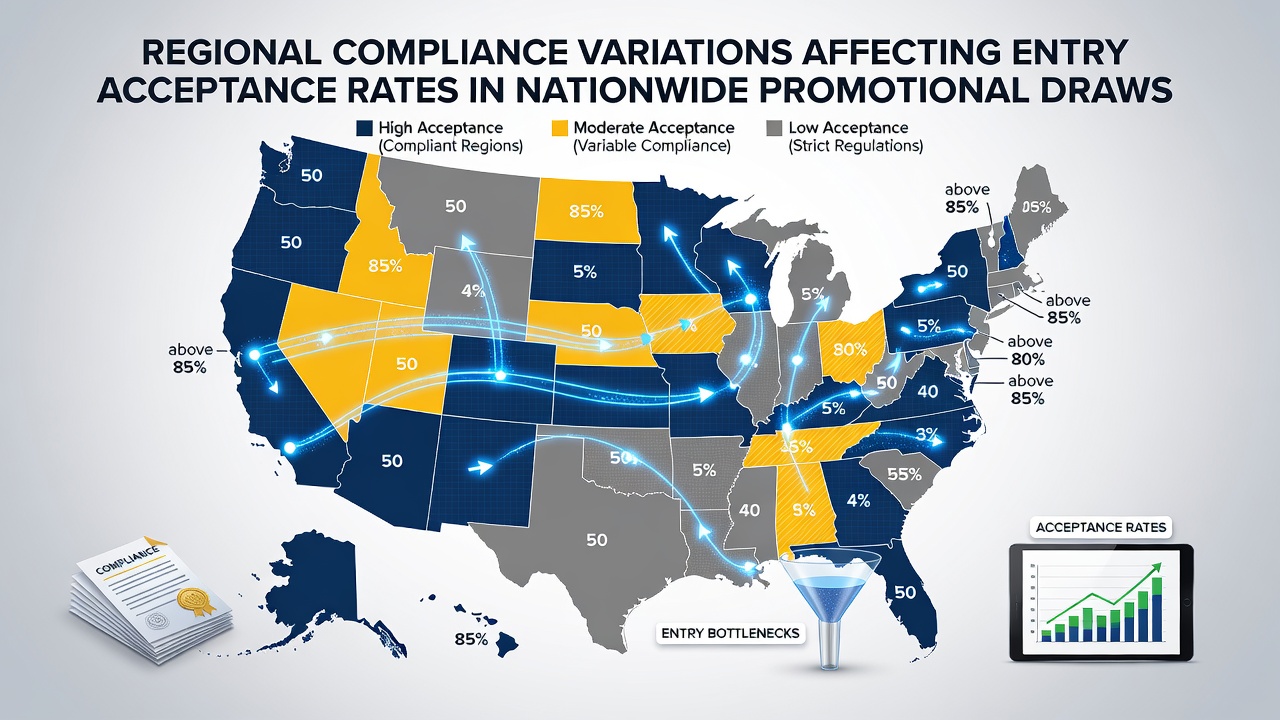
States maintain separate standards for promotional entries, and observers note that some require explicit opt-in language for data collection while others focus on prize claim procedures that must appear in all materials distributed within their borders. Researchers at academic institutions tracking these patterns found that acceptance rates dropped by up to 12 percent in states with stricter residency proof mandates during 2025 campaigns, whereas jurisdictions with streamlined digital verification saw higher throughput because entrants could complete forms without additional documentation layers. Those who've examined contest records across multiple events point out that incomplete address fields or mismatched zip codes often trigger automatic filters in states that cross-reference entries against voter rolls or utility databases.
Impact of July 2026 Regulatory Updates
July 2026 marks the rollout of updated disclosure rules in several states that now demand clearer separation between promotional offers and partner marketing messages, and this shift has already begun influencing how organizers structure entry paths for recurring draws. Figures from industry reports indicate that campaigns launching after this date must incorporate state-specific consent checkboxes, which has led to measurable changes in completion rates as participants navigate the added steps. Experts tracking these adjustments report that states adopting the changes early experienced temporary dips in accepted entries until systems adapted, while neighboring regions without the new mandates maintained steadier flows because their rules remained unchanged.
Case Examples from Multi-State Campaigns
One study revealed that a national electronics giveaway encountered rejection clusters in three western states where rules prohibit entries tied to product purchases, and this pattern emerged because the promotion bundled a required survey with a retail receipt upload that conflicted with local statutes. People who've analyzed the resulting datasets note that eastern states processed the same entry volume without issue since their frameworks allowed purchase-based entries under specific conditions. The reality is that organizers now deploy geo-fenced forms that detect participant location at submission and adjust required fields accordingly, which helps maintain acceptance equity across regions even as underlying laws stay fragmented.
Canadian provincial guidelines add another layer when promotions cross the border, and data from government monitoring shows that age verification protocols differ enough from U.S. state standards to cause processing delays for shared participant pools. According to information published by the Australian Competition and Consumer Commission, similar variations appear in cross-jurisdictional campaigns where mandatory cooling-off periods for prize claims alter acceptance timelines compared to American counterparts. Those monitoring these trends observe that successful campaigns integrate real-time compliance checks that flag potential conflicts before submission rather than after rejection occurs.
Technical Systems for Managing Variations
Entry platforms have incorporated algorithmic tools that scan submissions against a database of regional statutes, and this approach allows organizers to route entries to the correct validation queue based on declared location. Research indicates that such systems reduce manual reviews by 35 percent in large-scale draws because they catch mismatches like missing state-specific disclosures early in the process. Observers note that the technology relies on regularly updated legal feeds from each jurisdiction, which means accuracy depends on timely incorporation of rule changes like those scheduled for mid-2026.
Effects on Overall Participation Trends
Participation data collected across repeated national events demonstrates that regions with more complex compliance layers consistently show lower entry volumes, and this holds true even when prize pools remain identical nationwide. The ball's in the organizers' court to simplify paths where possible while still meeting local mandates, which often involves creating modular forms that expand or contract based on detected location. What's significant is that these adaptations have not eliminated disparities entirely, since some states continue to require paper-based affidavits that digital systems cannot fully replicate.
Conclusion
Regional compliance variations continue to shape entry acceptance rates in nationwide promotional draws through differences in verification methods, disclosure rules, and procedural mandates that each jurisdiction applies independently. As updates take effect in July 2026 and beyond, organizers and participants alike encounter an evolving landscape where location detection and modular form design play central roles in maintaining access. The patterns emerging from recent campaigns underscore how localized rules intersect with centralized promotion structures to produce measurable differences in outcomes across states and provinces.