Regional Regulatory Variations Affecting Entry Processing in Cross-Border Promotional Campaigns
Greta Simmons · Aug 5, 2026
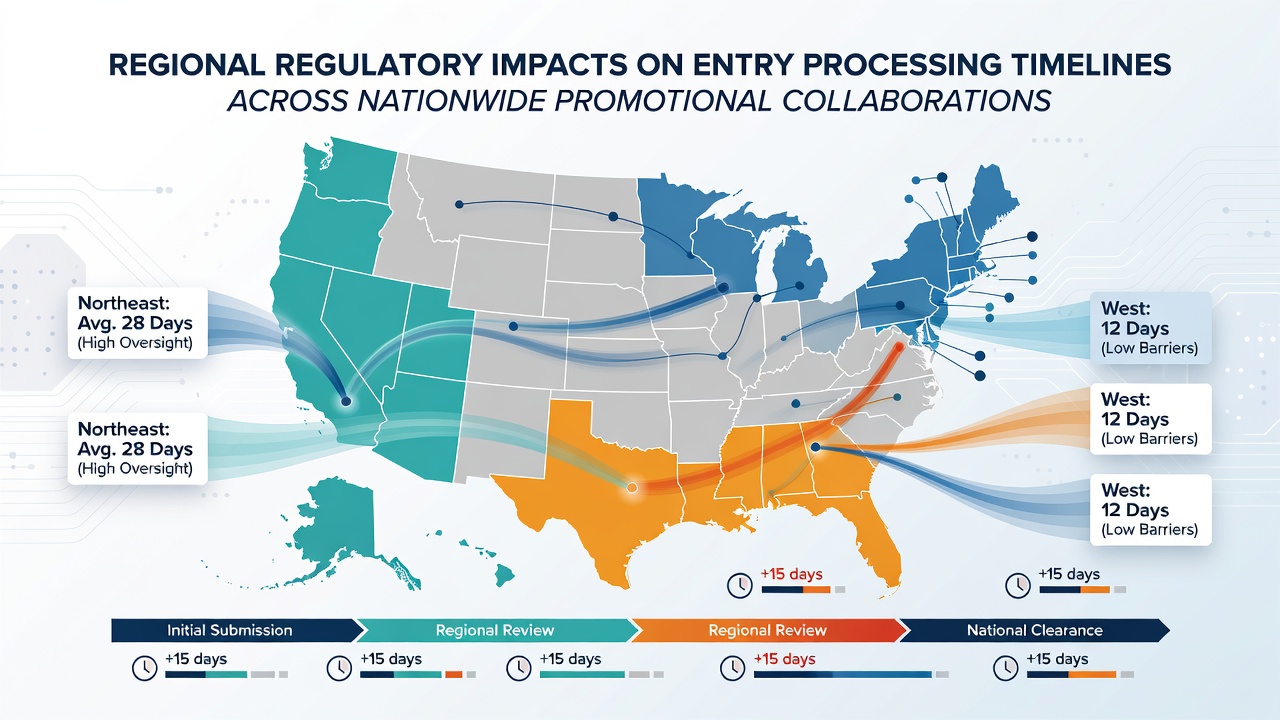
Regional Regulatory Variations Affecting Entry Processing in Cross-Border Promotional Campaigns
State-level consumer protection statutes create measurable differences in how long it takes for promotional entries to move through validation systems when brands run coordinated campaigns across several jurisdictions at once. Data collected by industry tracking services shows that processing windows stretch from as little as seven business days in some states to more than thirty in others, depending on teh specific disclosure and bonding requirements each regulator enforces.
California and New York maintain some of the stricter pre-approval steps for any promotion offering prizes valued above certain thresholds, and those steps directly extend the period before entries can be logged into centralized databases. Meanwhile states with lighter oversight allow partners to begin scanning and timestamping submissions within forty-eight hours of receipt, which compresses overall timelines for the entire national pool.
State Bonding Rules and Their Direct Effect on Validation Speed
Bonding requirements function as a gate that must clear before any entry data enters the shared processing pipeline, and the amount demanded plus the paperwork turnaround time varies sharply by location. In Texas the bond calculation ties directly to the total prize pool, so larger multi-state campaigns often wait an extra ten to fourteen days while underwriters review documentation. Florida applies a flat filing fee structure instead, which tends to shorten that initial hold period but still requires separate affidavits from each participating retailer.
These staggered start dates mean that entries collected through the same digital platform reach the common database at different moments, forcing administrators to build buffer periods into their selection schedules. Observers note that campaigns running in August 2026 will face the same patchwork because no federal standardization has replaced the existing state-by-state approach.
Disclosure Language Requirements Across Jurisdictions
Every participating state insists on its own exact phrasing for official rules, and those wording mandates must appear on every entry path before submissions become eligible for processing. When a national partner collaboration uses a single online form, the system must either segment users by detected location or maintain multiple rule sets that trigger automatically. Both approaches add layers of automated checks that lengthen the interval between submission and confirmation of receipt.
Studies conducted by university research teams tracking multi-state promotions found that campaigns using unified forms spent an average of nine additional days reconciling conflicting disclosure statements before any drawings could proceed. Separate state-specific landing pages reduced that reconciliation time but increased the total volume of entries that required manual review for completeness.
Cross-Partner Data Sharing Restrictions
Some state regulations limit how much participant information one sponsor may share with another even when both appear on the same promotion, and these limits slow the matching process that confirms an entry has not already been counted under a different partner offer. According to reports published by the Federal Trade Commission, such restrictions have lengthened average validation cycles by up to eighteen percent in campaigns involving three or more sponsors.
Canadian provincial rules add another dimension when promotions cross the border, because the Competition Bureau requires distinct record-keeping formats that do not align automatically with U.S. state systems. Administrators therefore insert extra conversion steps that push final eligibility lists further out on the calendar.
August 2026 Timeline Pressures
Promotions scheduled to launch in August 2026 will encounter the same regional differences plus any new filing windows that states adopt before then. Several Midwest legislatures have already signaled plans to raise minimum bond amounts, which will extend the pre-processing window for any campaign that includes those states. East Coast regulators meanwhile continue to test electronic bond filing systems that could trim two or three days from their current average if the pilots succeed.
Those preparing nationwide collaborations therefore map each participating jurisdiction’s current and anticipated requirements well in advance, then build the longest expected delay into the master schedule so that no single state’s rules hold up the national drawing date.
Conclusion
Regional regulatory differences continue to dictate the pace at which entries move from receipt to verified status in multi-state promotional partnerships. The variation stems from bonding amounts, disclosure mandates, and data-sharing limits that each state applies independently. Campaigns planned for 2026 must account for these differences at the design stage to keep selection dates consistent across all participating regions.