Redemption Timelines for Partner Offers and Their Influence on Multi-Stage Contest Participation
Greta Keller · Aug 3, 2026
Redemption Timelines for Partner Offers and Their Influence on Multi-Stage Contest Participation
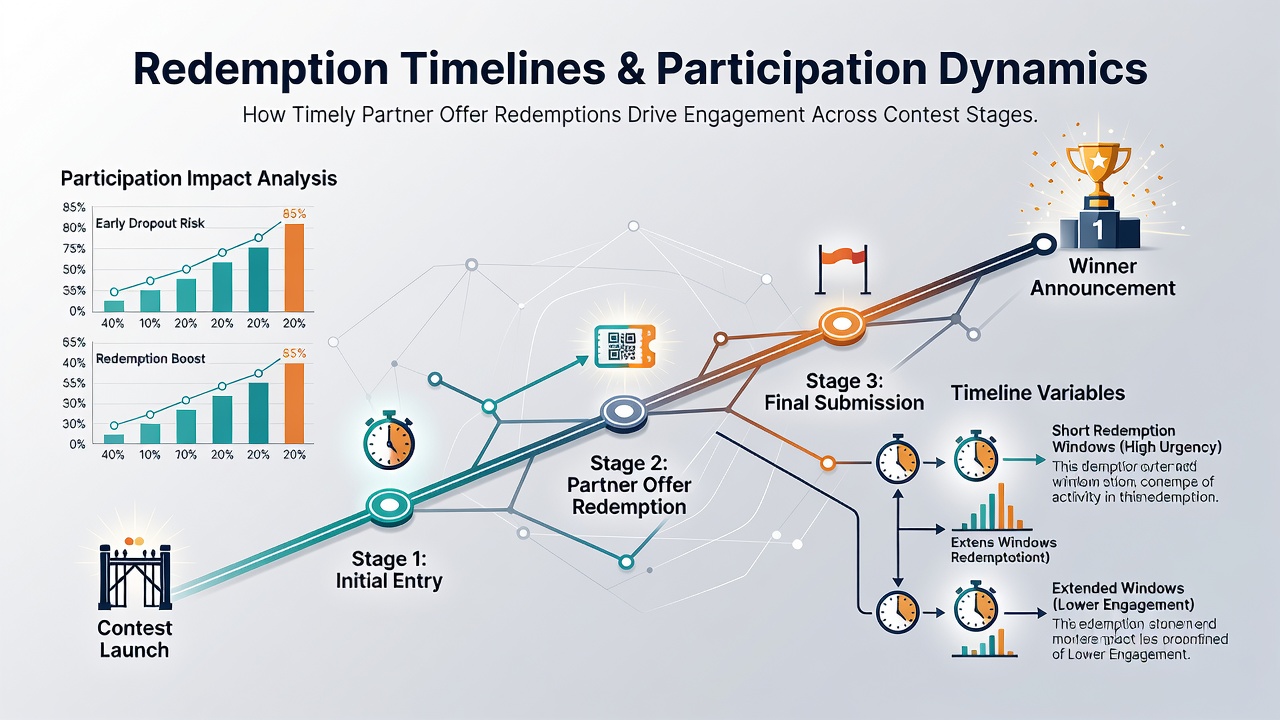
Redemption timelines attached to partner offers in multi-stage contest events create measurable shifts in how participants move through successive entry phases, and observers note that these deadlines often determine whether entrants complete later stages or drop off entirely. Data from promotional campaigns tracked across several regions shows that shorter redemption windows correlate with reduced progression rates between contest phases, while extended periods allow more sustained engagement through repeated partner interactions.
Multi-stage contests typically require entrants to fulfill conditions from multiple sponsors in sequence, and the time allotted for redeeming partner offers directly affects completion rates because participants must balance these tasks against daily routines and competing deadlines. Researchers have documented cases where offers expiring within seven days of issuance produced completion rates 18 percent lower than those allowing 30 days, according to aggregated campaign reports compiled by industry analysts.
Mechanics of Redemption Windows in Sequential Promotions
Partner offers embedded in contest structures usually include specific redemption instructions that participants must follow before advancing, and these steps range from online form submissions to in-store verifications that generate unique codes for later stages. When timelines compress around major events such as August 2026 regulatory updates in several jurisdictions, organizers observe tighter coordination between sponsors to prevent bottlenecks that could otherwise stall large numbers of entrants.
Systems that log timestamps for each redemption attempt reveal patterns where early responders maintain higher overall participation across all stages, whereas those who delay frequently encounter expired offers and exit the process. One analysis of national campaigns indicated that automated reminders sent at the midpoint of a redemption period increased completion by 12 percent compared with no reminders at all.
Observed Effects on Entry Volume and Progression
Entry volumes in later contest stages decline when partner redemption periods overlap with other high-demand activities, and studies tracking timestamped data across multi-regional events confirm that overlapping deadlines reduce cross-stage movement by measurable margins. Participants who encounter rigid cutoffs often redirect attention to alternative promotions that offer more flexible timing, which alters overall engagement trends within a single campaign.
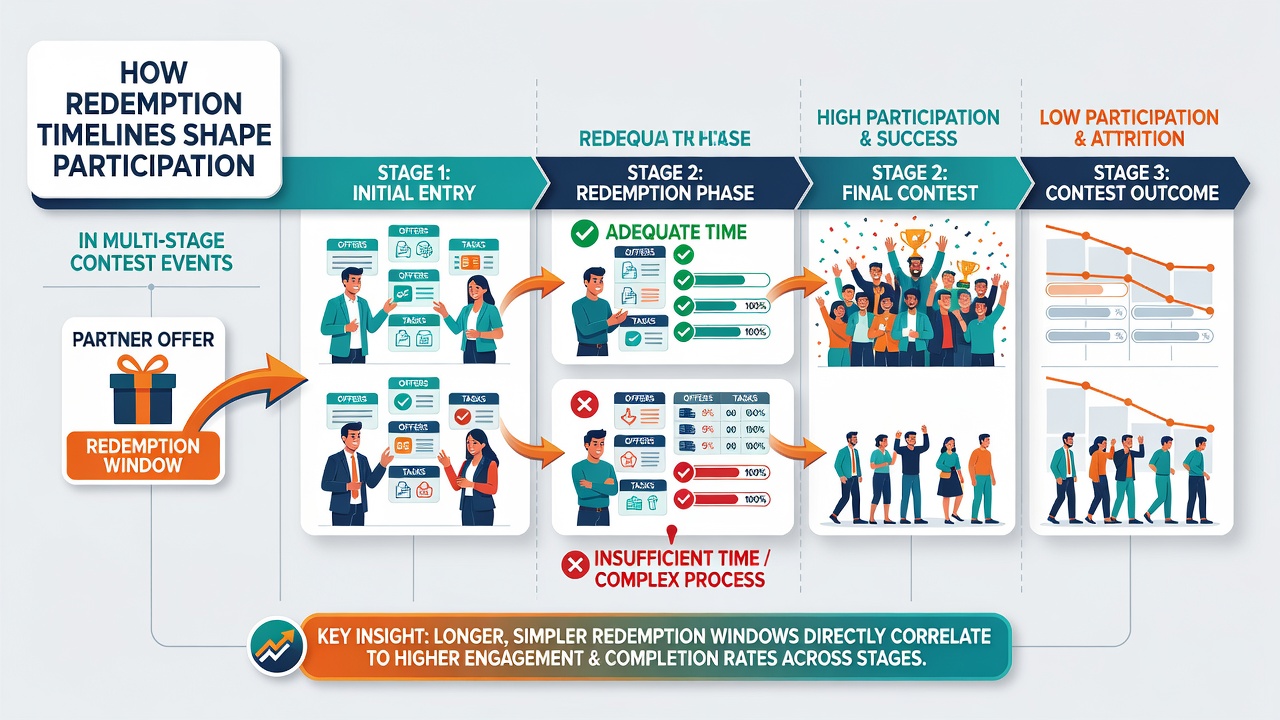
Those who have examined entry records across repeated events note that campaigns allowing staggered redemptions sustain steadier participation curves, and this approach spreads administrative load for organizers while giving entrants breathing room between obligations. Figures from collaborative promotions in North America and the European Union illustrate that flexible timelines support continued involvement even when initial stages attract high volumes of new users.
Regulatory and Operational Considerations Across Regions
Agencies such as the Federal Trade Commission in the United States and the Australian Competition and Consumer Commission have issued guidelines that require clear disclosure of redemption deadlines in all promotional materials, and compliance with these standards helps maintain transparency that supports higher completion rates. Sponsors who align their timelines with these requirements report fewer disputes and smoother transitions between contest phases.
Academic examinations of promotional mechanics, including work published through university marketing research centers, demonstrate that redemption clarity influences trust levels, which in turn affects whether participants invest effort in subsequent stages. When deadlines remain ambiguous or change without notice, progression metrics drop because entrants lose confidence in the process and seek more predictable alternatives.
Conclusion
Redemption timelines for partner offers function as structural elements that shape how participants navigate multi-stage contest events, and available records indicate consistent relationships between deadline length, reminder systems, and stage completion. Organizers who calibrate these windows against participant behavior data achieve more predictable engagement patterns across sequential phases, while regulatory frameworks in multiple regions continue to emphasize transparent communication of all time-bound requirements.