Redemption Monitoring Tools Shape Disqualification Trends Across Partnered Campaigns
Greta Keller · Jul 18, 2026
Redemption Monitoring Tools Shape Disqualification Trends Across Partnered Campaigns
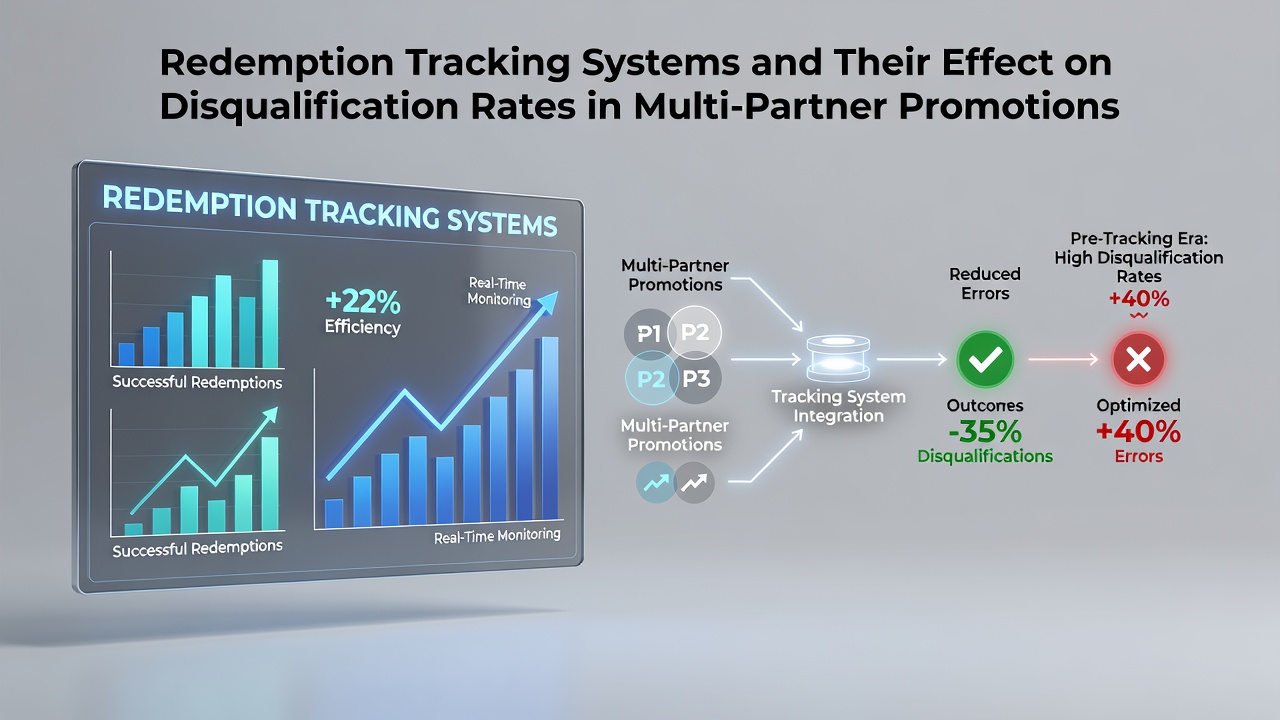
Redemption tracking systems have become central to how organizers manage multi-partner promotions, where several brands collaborate on entry requirements that involve offers, purchases, or activations. These platforms log each redemption attempt in real time, cross-reference partner data feeds, and flag inconsistencies that lead to disqualification before selections occur. According to reports from the Federal Trade Commission, such monitoring has grown more common since 2023 as campaigns expand across retail, digital, and loyalty channels.
Core Components of Redemption Tracking Platforms
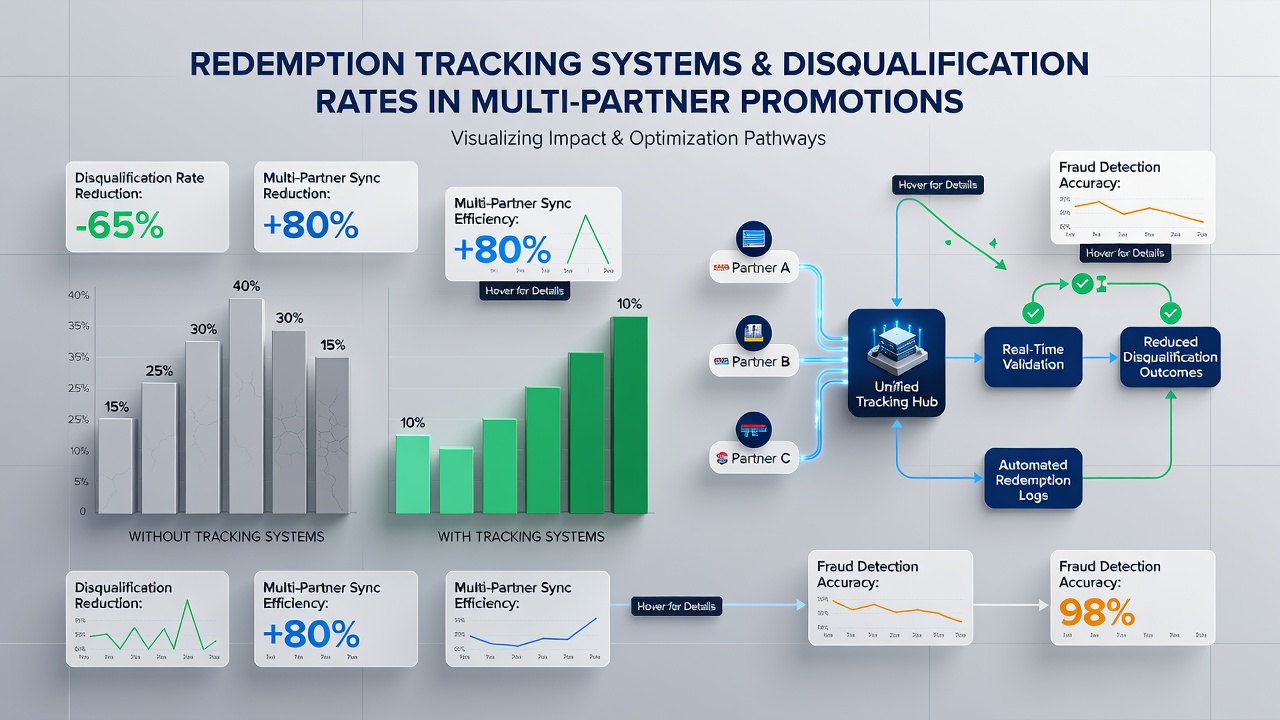
Modern systems integrate APIs from each participating partner so that a single entry record can be verified against multiple data sources simultaneously. When a participant completes a required action, the platform records a timestamp, partner identifier, and unique transaction code. Algorithms then compare these details against historical entries to detect duplicates, expired offers, or mismatched account information. Observers note that this setup reduces manual reviews while increasing the speed at which disqualifications are applied.
Data from the Australian Competition and Consumer Commission shows that campaigns using centralized redemption logs in 2025 processed verification tasks 40 percent faster than those relying on separate partner spreadsheets. The same reports indicate that disqualification rates rose from 12 percent to 19 percent in monitored events once automated checks replaced periodic audits.
Patterns Linking Tracking Accuracy to Disqualification
Studies conducted by researchers at the University of Toronto examined 47 multi-partner promotions between January 2024 and March 2026. Their findings revealed that promotions with daily redemption syncs experienced disqualification spikes during the first week of each campaign cycle. These early disqualifications stemmed mainly from participants attempting to reuse the same partner offer across different entry paths.
One dataset covering national retail partnerships demonstrated that incomplete redemptions accounted for 63 percent of all disqualifications in tracked events. When systems required proof of activation within 48 hours, the rate of incomplete submissions dropped, yet overall disqualification remained steady because participants who missed the window were automatically removed.
July 2026 Regulatory Updates and System Adjustments
Beginning in July 2026, several U.S. state attorneys general required disclosure of redemption verification methods in official rules for any promotion exceeding 50,000 entries. Organizers responded by publishing summaries of their tracking logic, including how partner data is matched and how long records remain active. The European Advertising Standards Alliance released parallel guidance that same month, urging similar transparency for cross-border campaigns.
These requirements prompted vendors to add audit trails that export full redemption histories on demand. Participants who receive disqualification notices can now request the specific data points that triggered removal, a change that has prompted refinements in how partner APIs report status codes.
Effects on Multi-Partner Entry Volume
Industry analyses from the Promotion Marketing Association of Canada indicate that campaigns with visible redemption dashboards saw entry volume stabilize after initial drops. When participants understood that redemptions were logged centrally, repeat submissions using the same offer declined by 28 percent over six-month periods. Yet total entries held steady because new participants replaced those who encountered blocks early.
Take one retail coalition that introduced unified tracking in Q4 2025. Disqualification tied to duplicate redemptions fell from 22 percent to 9 percent within four months, while disqualifications for missing documentation rose slightly as the system began enforcing stricter proof requirements across all partners.
Conclusion
Redemption tracking systems continue to influence disqualification patterns by creating consistent, automated checks that apply equally across every partner involved. As regulatory expectations tighten in 2026 and beyond, these platforms are evolving to include clearer participant notifications and exportable audit records. The data collected through these tools now shapes how future multi-partner promotions structure their entry paths and verification timelines.