Record Reconciliation Strategies Supporting Equitable Outcomes in Multi-Sponsor Prize Draws
Iris Keller · Jul 20, 2026
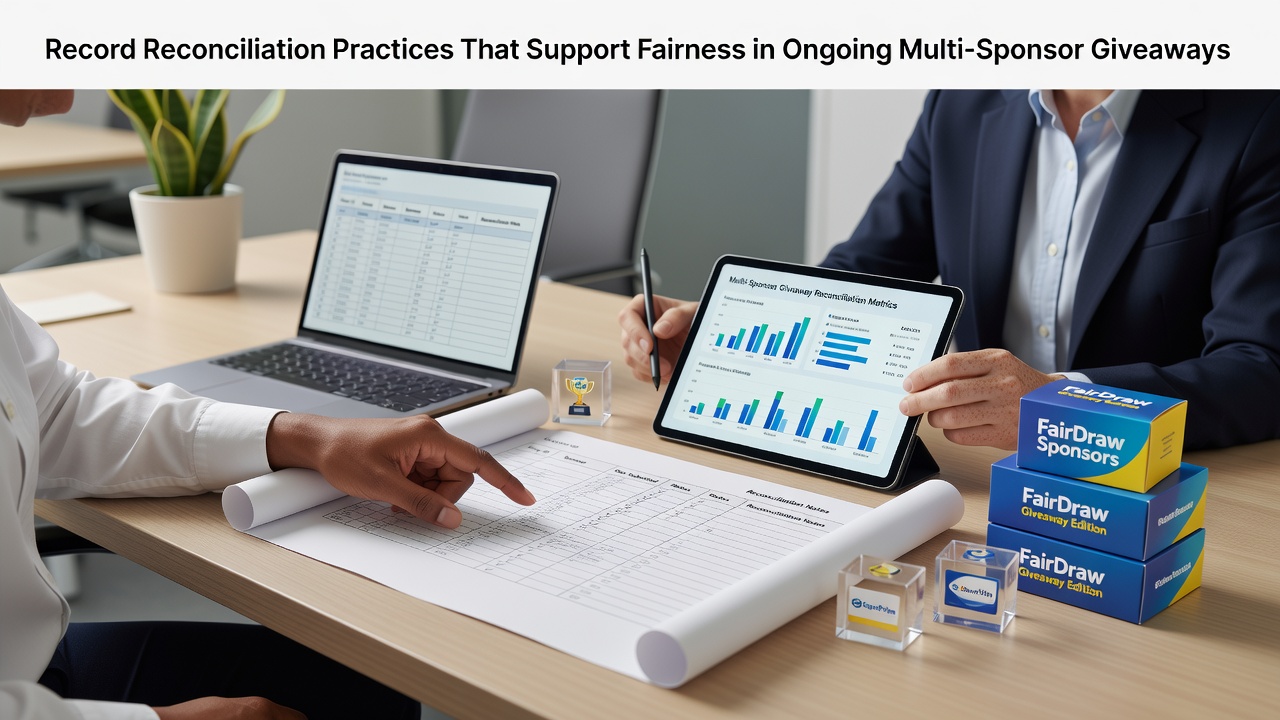
Record Reconciliation Strategies Supporting Equitable Outcomes in Multi-Sponsor Prize Draws
Multi-sponsor giveaways that run over extended periods rely on coordinated data handling to keep participant selections balanced across partners, and record reconciliation serves as the core mechanism for aligning entries from separate organizations without duplication or omission. Sponsors contribute participant data through shared platforms where timestamps, unique identifiers, and offer redemptions get matched against centralized logs, which reduces the chance of one sponsor's records overriding another's during final draws.
Core Practices in Cross-Partner Data Alignment
Teams managing these events begin by establishing standardized entry fields that every sponsor adopts, including submission times and verification codes, while automated scripts compare incoming batches against historical records to flag inconsistencies such as repeated identifiers or mismatched regional eligibility markers. Observers note that this alignment process becomes particularly active during peak months when multiple partners launch overlapping campaigns, since July 2026 marks the rollout of updated federal guidelines in several jurisdictions that require documented reconciliation audits for promotions spanning more than two sponsors.
Data from industry reports indicate that systems incorporating daily batch comparisons catch discrepancies faster than weekly reviews, allowing organizers to adjust participant pools before selections occur. Those who've studied these workflows find that combining human review with algorithmic matching produces cleaner datasets, especially when partners operate across different time zones and data formats.
Impact on Selection Equity Across Regions
Reconciliation extends beyond simple deduplication to include validation of partner-specific offers, where incomplete redemptions trigger exclusion flags that carry forward into subsequent rounds. Research from Canadian regulatory reviews shows that transparent logging of these exclusions maintains proportional representation among entrants from various sponsors, preventing any single partner from dominating winner lists over time.
Figures from multi-state promotions reveal that events using immutable entry records experience fewer post-draw challenges, because participants can trace their submissions through timestamped chains that link back to original partner submissions. This traceability supports fairness claims when organizers release winner disclosures on fixed schedules, such as the monthly summaries required in ongoing national campaigns.

Integration with Regulatory and Audit Requirements
Agencies overseeing consumer promotions, including the Australian Competition and Consumer Commission, have highlighted reconciliation protocols in their compliance materials as essential for verifying that promotional selections reflect the full scope of entries submitted across collaborators. ACCC guidelines emphasize periodic third-party audits that examine how sponsors resolve conflicting data points before prize distribution begins.
Academic studies on promotional integrity further demonstrate that organizations adopting blockchain-style verification for entry logs achieve higher consistency rates in recurring events, since each transaction remains tamper-evident and accessible for review. These approaches integrate with existing timestamp protocols to create audit trails that satisfy both internal partners and external oversight bodies without disrupting daily operations.
Case Examples from Collaborative Campaigns
One national campaign spanning five sponsors in 2025 implemented automated reconciliation checkpoints every 48 hours, which allowed organizers to identify and correct a batch of duplicated entries from overlapping digital channels before the mid-campaign draw. The adjustment preserved equitable odds for participants tied to each partner and aligned with emerging standards expected to strengthen in July 2026.
Another program tracked cumulative entries through partner dashboards that reconciled offer redemptions against initial submissions, revealing patterns where incomplete partner actions led to systematic undercounting in certain regions. Adjustments based on these findings restored balance across the participant pool while maintaining compliance with multi-jurisdictional rules.
Conclusion
Record reconciliation practices continue to evolve alongside regulatory updates and technological tools that facilitate real-time data matching among sponsors. Organizations that embed these methods into their operational workflows produce verifiable records that uphold selection integrity throughout extended promotional periods, supporting consistent participant trust across collaborative prize events.