Distributed Ledger Solutions for Preserving Entry Authenticity in Repeated Giveaway Events
Iris Keller · Jul 15, 2026
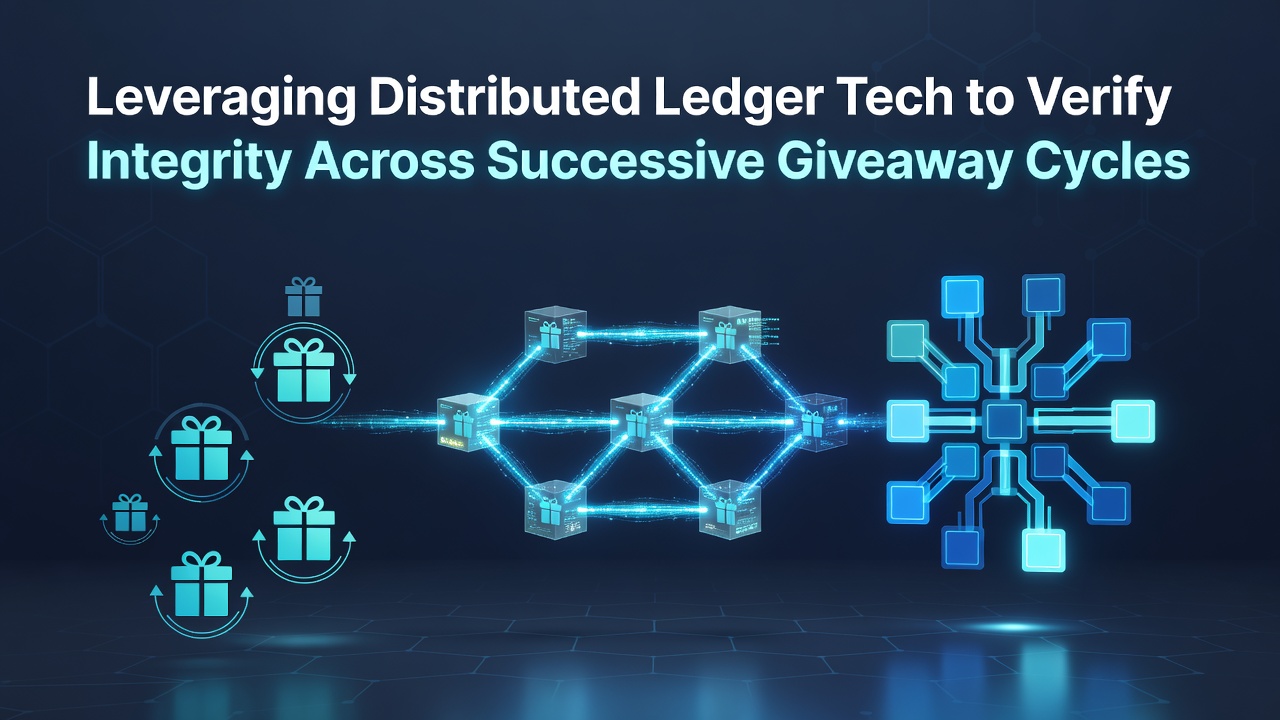
Distributed Ledger Solutions for Preserving Entry Authenticity in Repeated Giveaway Events
Distributed ledger technology records transactions across multiple nodes in a way that resists alteration, and this capability has found applications in tracking entries for recurring promotional events where successive cycles require consistent verification of participant data. Systems built on these ledgers maintain chronological logs that link each new cycle to prior ones, which reduces opportunities for duplicate submissions or unauthorized modifications between draws.
Core Mechanisms of Ledger-Based Verification
Each entry receives a timestamped hash that incorporates details such as participant identifiers, submission channels, and associated partner offers, while subsequent cycles reference these hashes to confirm continuity without exposing full personal information. Nodes distributed among sponsors and independent auditors reach consensus on the validity of new records before they append to the chain, and this process operates continuously rather than in isolated batches. Research from academic institutions in Canada shows that such consensus protocols cut discrepancies in multi-cycle datasets by measurable margins when compared against centralized databases.
Integration Across Successive Cycles
Giveaway organizers connect ledger entries to external data feeds from partner platforms, which allows automated cross-checks for redemptions or prior wins that might affect eligibility in later rounds. When a participant completes an offer in one cycle, the ledger updates with a confirmation token that carries forward, and this token appears in queries for the next draw without requiring manual review of historical files. In July 2026 several multi-state promotions plan to activate ledger modules that synchronize with regulatory reporting tools, which streamlines compliance documentation for events spanning multiple jurisdictions.

Observers note that the immutable nature of these records supports post-event audits by providing a single source of truth that all parties can query independently. Data from European regulatory summaries indicate that programs employing ledger verification experienced fewer disputes over selection fairness during overlapping campaign periods.
Applications in Multi-Partner Environments
Collaborative promotions involving several brands rely on shared ledger access to monitor cumulative entries while respecting each partner's data boundaries through permissioned nodes. A participant who enters via one sponsor's channel generates a record visible to others only in aggregated form, yet the underlying hash chain preserves the full sequence for dispute resolution. Industry reports from Australian trade associations document cases where such shared visibility prevented over-allocation of prizes in national recurring draws.
Regulatory and Technical Considerations
Authorities in various regions examine how ledger systems align with existing promotion laws, particularly rules governing record retention and participant notification timelines. Permissioned networks often satisfy these requirements by limiting write access to verified entities while allowing read access for oversight bodies. Technical implementations incorporate zero-knowledge proofs that let auditors confirm compliance without revealing individual entry details, and this approach appears in pilot programs described in North American research publications.
Conclusion
Distributed ledger technology supplies a framework for linking entry data across repeated giveaway cycles in a manner that supports verification without central points of failure. Implementations continue to evolve as more organizers adopt these tools for both operational efficiency and regulatory alignment, with scheduled expansions noted for 2026. The resulting records offer a transparent yet controlled history that stakeholders can reference when questions arise about selection processes or eligibility determinations.