Digital Verification Pathways Guiding Entry Validation Across Multi-Regional Recurring Prize Events
Greta Simmons · Jun 13, 2026
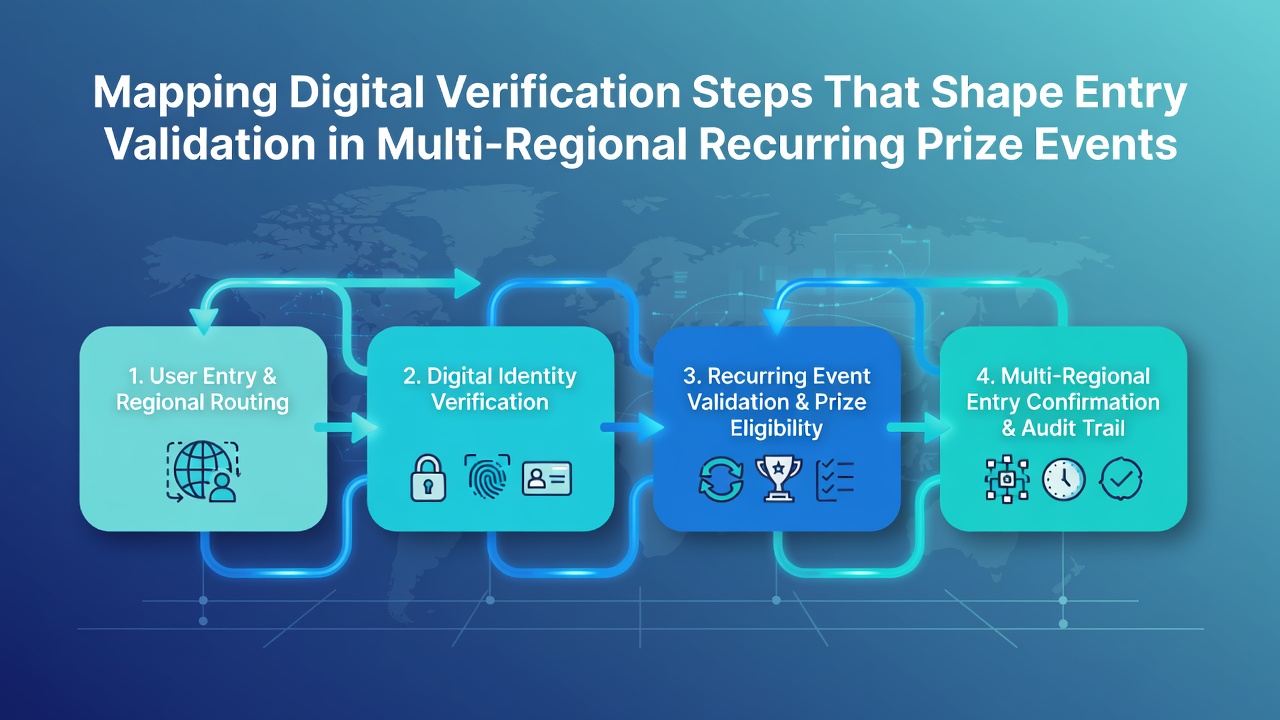
Digital Verification Pathways Guiding Entry Validation Across Multi-Regional Recurring Prize Events
Entry validation in recurring prize events spanning multiple regions relies on layered digital checks that confirm eligibility before any selection occurs. Organizers deploy sequential protocols that begin with basic account creation and extend through geographic and behavioral filters, ensuring compliance with varying local regulations. These steps operate continuously in events that repeat draws over months or years, adjusting parameters as participant data accumulates.Initial Account and Contact Verification Layers
Systems first require email confirmation and phone number validation through one-time codes sent to submitted addresses. Data shows that incomplete contact steps account for a significant portion of rejected entries in multi-state promotions, according to industry reports from the National Association of Consumer Shows. Address verification follows, cross-referencing postal details against official databases to confirm residency within eligible zones, while algorithms flag mismatches that might indicate proxy usage.
Geographic and Regional Compliance Filters
Multi-regional events incorporate IP address mapping and device fingerprinting to enforce state or country boundaries. Participants attempting entry from outside designated areas encounter automated blocks, and records indicate these filters process thousands of attempts daily during peak periods. In June 2026, updates to cross-border data rules in several jurisdictions are expected to prompt refinements in how these location checks integrate with privacy standards from bodies like the Australian Competition and Consumer Commission.
Recurring formats demand ongoing monitoring because eligibility can shift if participants relocate or if rules evolve between draw cycles. Verification tools log each entry against historical patterns, rejecting duplicates that violate frequency limits set by organizers.
Behavioral Pattern Analysis in Repeated Draws
Advanced filters examine entry timing, submission frequency, and interaction history to detect automated scripts or coordinated activity. Researchers at institutions studying promotional compliance have documented how timestamp clustering often signals non-compliant behavior in national contests. These analyses run in the background, updating risk scores for each account as events progress through multiple rounds.
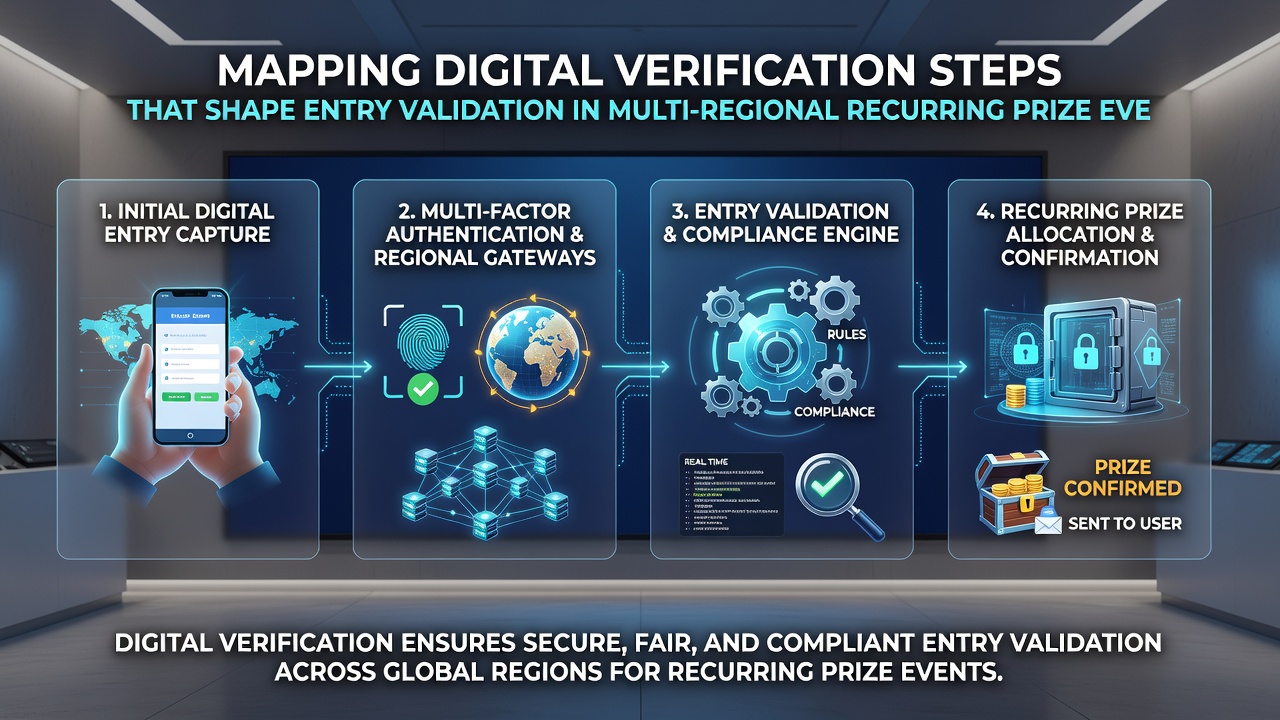
Integration of Third-Party Data Sources
Validation platforms frequently pull supplemental information from credit bureaus or public records to confirm age and identity details without storing sensitive data directly. One study from a European research consortium highlighted reduced claim disputes when such external checks precede final selections in partner-sponsored events. This approach maintains participant privacy while satisfying requirements across diverse legal frameworks.
Systems also track redemption of any required partner offers, since incomplete actions trigger disqualification flags visible in subsequent draws. Observers note that these interconnected checks create transparent audit trails that regulators review during periodic examinations of large-scale promotions.
Conclusion
The mapping of these verification steps reveals an interconnected framework that balances access with regulatory adherence in recurring prize structures. As events continue across regions, the emphasis remains on precise logging and adaptive filtering that responds to both technical signals and jurisdictional shifts, supporting consistent outcomes over extended timelines.