Database Cross-Checks and Eligibility Determinations in Multi-Regional Promotional Prize Events
Kai Friedrich · Aug 24, 2026

Database Cross-Checks and Eligibility Determinations in Multi-Regional Promotional Prize Events
Cross-referencing sponsor databases has become a standard step in eligibility verification for prize distributions that span multiple regions, and this practice shapes how organizers confirm participant qualifications before any awards move forward. Organizers pull data from separate sponsor systems to match entry records against residency rules, prior win histories, and redemption requirements, which reduces the chance of releasing prizes to ineligible parties while streamlining the overall selection workflow.
Core Mechanics of Cross-Referencing in Prize Systems
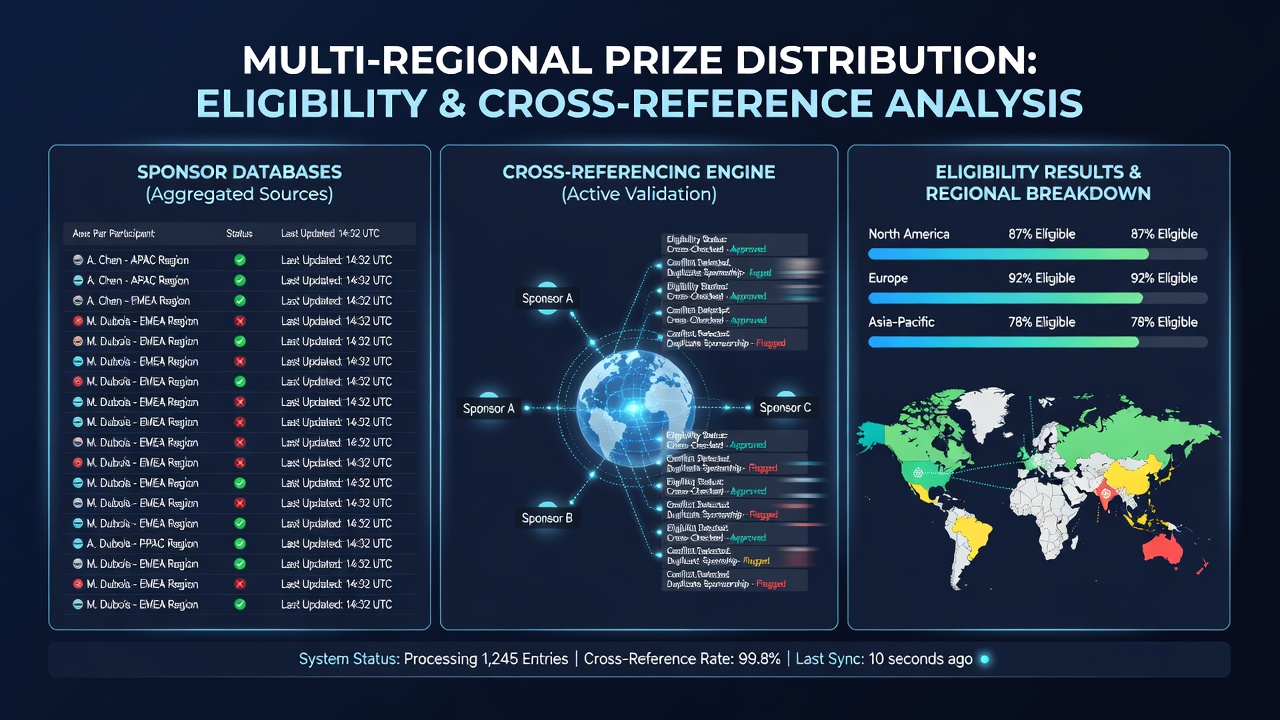
Multi-regional events often involve several sponsors, each maintaining its own database of participant interactions, and cross-referencing merges these sources into a single validation layer that flags conflicts automatically. Systems compare timestamps, geographic indicators, and account identifiers across records, so an entry submitted under one sponsor's portal can be checked against another sponsor's list of previous claimants without manual review in every case. This integration happens through secure APIs that update in real time, allowing verification teams to see a consolidated profile rather than isolated fragments from each partner.
August 2026 marks the rollout of updated data-sharing standards in several jurisdictions, and those standards require sponsors to include standardized fields for residency verification and prior prize status, which makes cross-referencing faster and more consistent across borders. Organizers who adopted these fields early report fewer delays during claim processing because mismatched data surfaces before winners receive notification instead of after.
Effects on Eligibility Checks Across Regions
Eligibility rules differ by region, with some areas imposing age thresholds, employment restrictions, or limits on the number of prizes one household may receive, and cross-referencing allows organizers to apply all applicable rules in one pass rather than running separate checks for each jurisdiction. When a database query reveals that a participant already claimed a prize from a partner sponsor within the same calendar year, the system withholds approval until the entrant supplies additional documentation or the claim window expires.
Take one organizer handling a North American and European promotion who discovered duplicate entries through cross-referenced records, and the team then adjusted the selection pool before final draws took place. Such adjustments prevent downstream disputes and keep distributions aligned with each region's legal requirements without extending timelines.
Regulatory Context and Industry Practices
According to Federal Trade Commission guidance on promotional programs, sponsors must maintain accurate records to support eligibility decisions, and cross-referencing helps meet that obligation by creating an auditable trail of data matches. In Australia the ACCC outlines similar expectations for transparent prize allocation, which encourages organizers to link sponsor systems so regulators can review consolidated logs if questions arise.
Industry groups such as the Promotion Marketing Association have documented how integrated databases reduce claim rejections by surfacing conflicts early, and those findings align with reports from research institutions tracking promotional compliance trends through 2026. Observers note that regions with stricter data-protection rules still permit cross-referencing when participants consent during entry, which keeps the process both legal and efficient.
Practical Examples from Recent Distributions
One multi-sponsor campaign spanning the United States and Canada used cross-referenced records to identify households that had already redeemed partner offers, and the verification team then excluded those entries from the final winner list before any public announcements. Another event in the Asia-Pacific region combined sponsor data to confirm that no single participant exceeded regional prize caps, which avoided violations that could have triggered regulatory reviews.
These cases show how the process operates in practice, with automated flags followed by human review only when the system detects anomalies such as mismatched addresses or overlapping account details. The result is a shorter path from draw to distribution while maintaining compliance across jurisdictions.
Conclusion
Cross-referencing sponsor databases now forms a central part of eligibility verification for multi-regional prize distributions, and it allows organizers to apply varied rules, detect prior wins, and maintain accurate records without extending processing times. Data from regulatory bodies and industry reports indicates continued adoption of these methods as events grow in geographic scope, particularly with the 2026 data-sharing updates that standardize fields across sponsors. The approach delivers consistent outcomes by connecting separate data sources into one verification step, which supports both compliance and timely prize delivery.