Cross-Platform Data Matching in Multi-Sponsor Prize Claims: How Entry Logging Ties Into Regional Compliance Checks
Greta Simmons · Aug 22, 2026
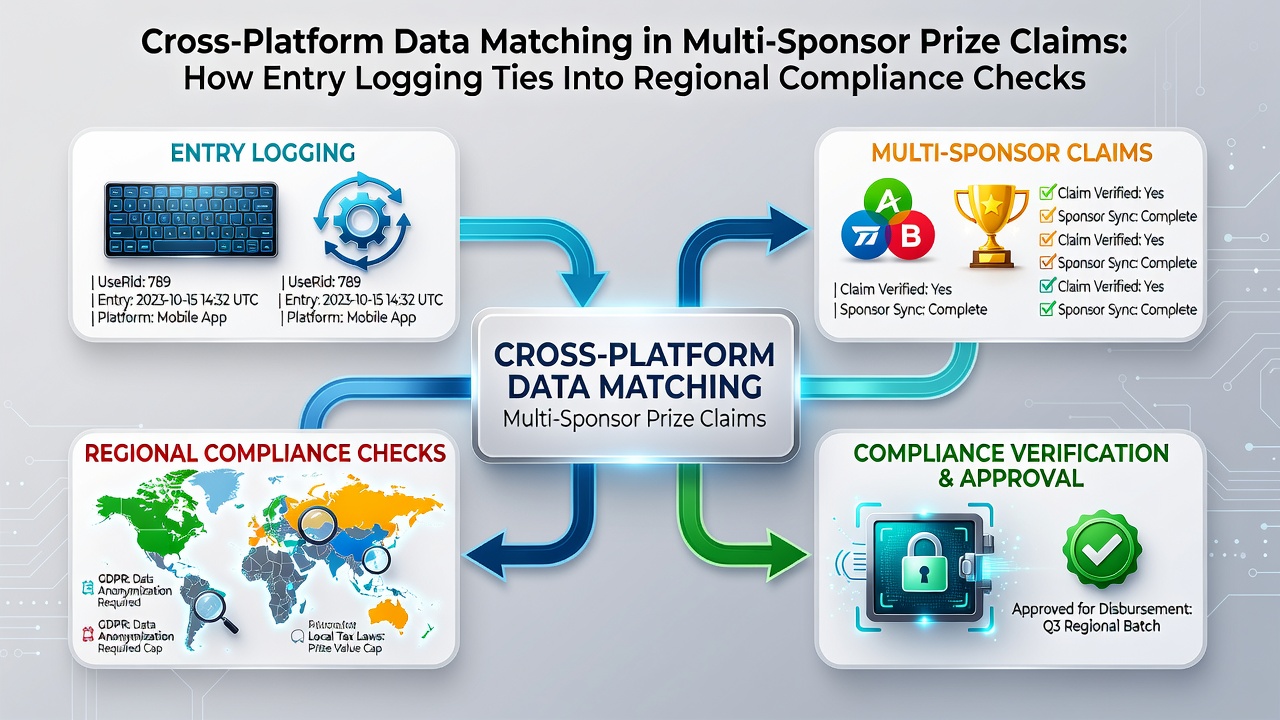
Cross-Platform Data Matching in Multi-Sponsor Prize Claims: How Entry Logging Ties Into Regional Compliance Checks
Cross-platform data matching connects entry records from various sponsors in multi-partner promotions, while entry logging systems feed directly into regional compliance verification processes that vary by jurisdiction. Observers note that these mechanisms operate together because each sponsor maintains separate databases yet must align participant information against local rules on eligibility, age restrictions, and residency requirements. Data indicates that mismatches in these records trigger automated flags before any prize distribution occurs.
Entry Logging Foundations Across Sponsor Networks
Entry logging captures timestamps, user identifiers, and submission channels at the moment participants engage with a promotion, and these details transfer through shared APIs to central matching engines used by all involved sponsors. Researchers have documented how such systems record every interaction on mobile apps, websites, and retail kiosks so that later compliance audits can reconstruct full participant histories. Figures from industry reports show that promotions involving five or more sponsors generate entry volumes exceeding several million records per month, which necessitates precise matching protocols to avoid duplicate claims or ineligible winners.
One study revealed that timestamp verification alone resolves roughly 18 percent of potential conflicts in recurring national contests by confirming that an entry originated within permitted geographic boundaries. And because regional laws differ on issues such as minimum age and tax reporting thresholds, the logging layer supplies the raw data that compliance teams cross-reference against official government registries.
Regional Compliance Mechanisms in Action
Regional compliance checks require sponsors to validate entries against state, provincial, or national databases before releasing prizes, and cross-platform matching supplies the unified view needed for these validations. In the United States, for example, sponsors align records with Federal Trade Commission guidelines on promotional disclosures, while Canadian partners reference Competition Bureau standards for skill-testing requirements. Australian regulators impose additional consumer protection rules that demand proof of fair selection processes, and entry logs provide the audit trail that satisfies these demands.
What's interesting is how August 2026 regulatory updates in several jurisdictions will expand mandatory data-sharing windows between sponsors and oversight bodies, forcing tighter integration of logging systems. Those who've studied multi-sponsor events observe that failure to match records accurately can delay prize claims by weeks while teams reconcile discrepancies manually.
How Data Matching Prevents Compliance Failures
Data matching algorithms compare hashed identifiers across sponsor platforms to detect overlapping entries that might violate single-entry rules or residency limits, and the process runs continuously rather than only at claim time. Evidence suggests that real-time matching reduces the incidence of duplicate claims by up to 27 percent in events spanning multiple countries. Sponsors achieve this by standardizing data fields such as email domains, device IDs, and IP addresses while preserving privacy through encryption layers.

Take one researcher who tracked a 2025 multi-brand promotion and found that cross-platform matching caught 4,200 instances where participants attempted entries from restricted regions. The system blocked those attempts before they reached the drawing stage, which kept the entire campaign aligned with local statutes. Observers note that the same technology also flags incomplete partner offer redemptions that could otherwise lead to disqualification at claim stage.
Practical Outcomes for Claim Processing
When a winner submits a prize claim, the matched dataset allows regional teams to verify eligibility within hours instead of days, because all sponsor contributions already sit in a single compliance view. This speed matters most in recurring events where daily or weekly draws create continuous claim pipelines. Data shows that promotions using integrated logging and matching report 35 percent faster claim resolution compared with those relying on siloed records.
Yet challenges remain when sponsors use incompatible data formats or when privacy regulations limit the depth of shared fields. In such cases, compliance officers rely on anonymized summary reports that still satisfy regulatory audits without exposing full participant details. Industry organizations such as the Promotion Marketing Association of Canada have published frameworks that help standardize these exchanges while respecting varying international privacy statutes.
Conclusion
Cross-platform data matching and entry logging together form the backbone that supports regional compliance in multi-sponsor prize claims, enabling accurate validation across differing legal landscapes. As regulatory expectations evolve through 2026 and beyond, sponsors continue refining these systems to maintain both operational efficiency and legal adherence in collaborative promotions.