Charting Participant Pathways Through Timestamped Entries in Recurring Prize Events
Iris Keller · May 16, 2026
Charting Participant Pathways Through Timestamped Entries in Recurring Prize Events
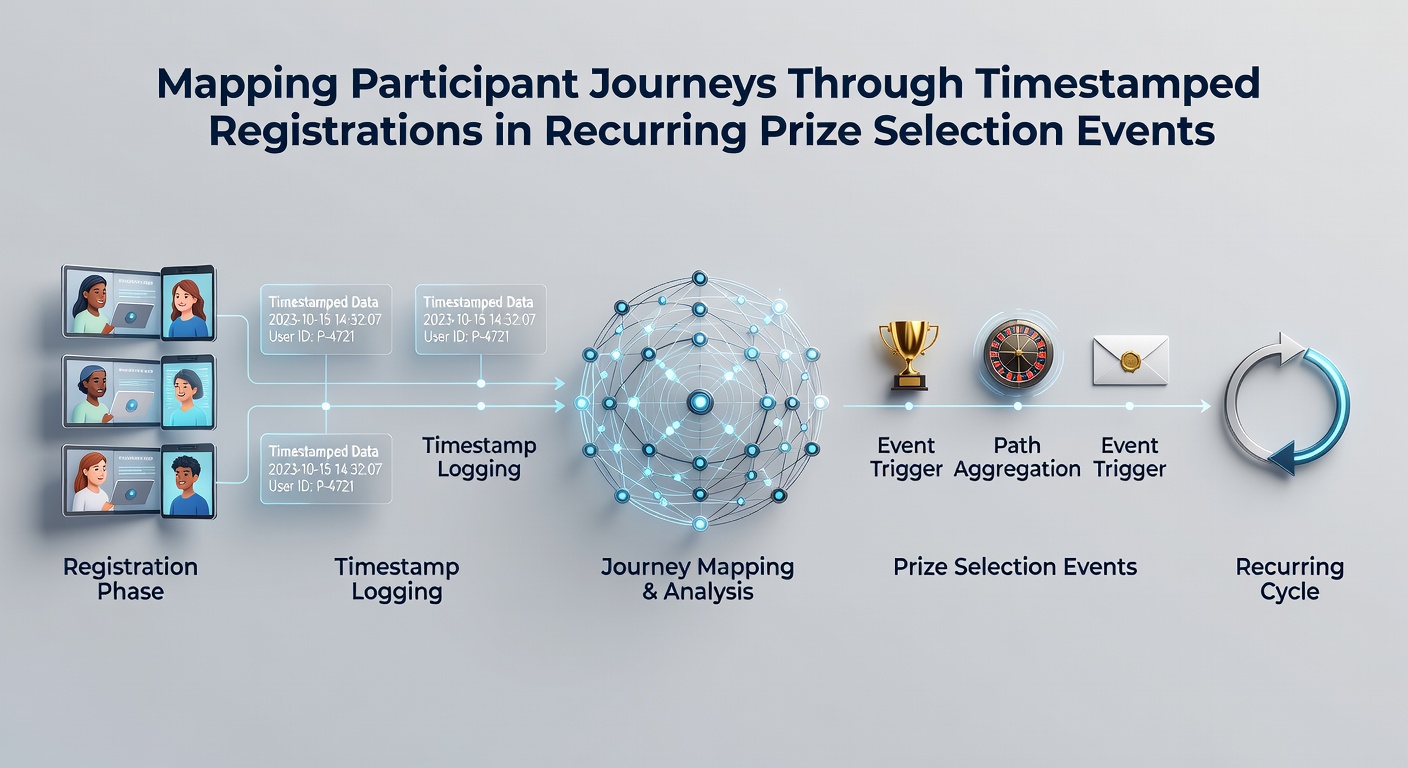
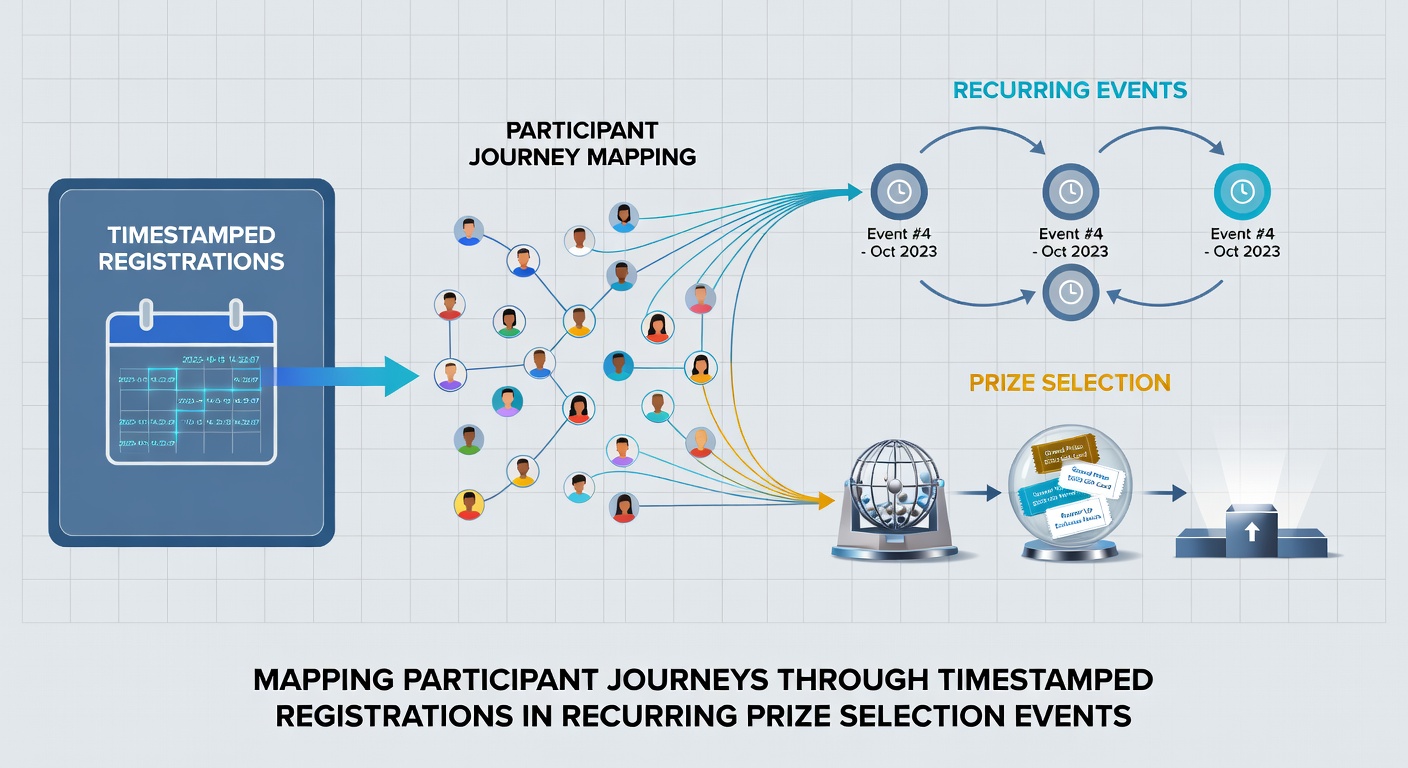
Organizations running recurring prize selection events rely on timestamped registration data to trace how individuals move through entry processes over time, and this approach turns raw registration logs into detailed journey maps that highlight patterns in participation frequency, timing preferences, and drop-off points. Researchers in consumer analytics have documented how each registration carries precise time markers that reveal whether entrants return for subsequent draws, adjust their behavior after initial wins, or exit the cycle entirely after a set number of attempts.
Timestamp analysis begins at the moment an individual submits an entry form, continues through confirmation emails and verification steps, and extends across multiple event iterations that occur weekly, monthly, or quarterly. Data from these sequences allows event operators to identify clusters of activity, such as surges in registrations during evening hours or spikes following promotional announcements, while also tracking the intervals between successive entries from the same participant.
Core Components of Timestamp-Driven Journey Mapping
Registration timestamps serve as anchor points that connect sequential actions into coherent pathways, and analysts combine these markers with entry method details, geographic indicators, and device identifiers to construct comprehensive participant profiles. Studies from industry research groups show that recurring events generate layered datasets where each cycle adds new timestamps that either reinforce existing patterns or introduce deviations worth investigating.
One common mapping technique segments participants into cohorts based on their first registration date, then follows how those cohorts behave across later draws; this method reveals whether early entrants maintain consistent involvement or gradually reduce activity as events progress. Additional layers incorporate bounce rates at verification stages and re-entry intervals that indicate whether participants treat the process as a one-time action or an ongoing routine.
Data Collection Practices and Analytical Tools
Event platforms capture timestamps at multiple touchpoints, including form submission, email opens, and prize claim confirmations, while secure databases store these records with standardized formatting that supports cross-cycle comparisons. Analysts apply sequence mining algorithms to these datasets to detect common pathways, such as rapid successive entries within a single hour or spaced-out registrations that align with announcement schedules.
According to reports from the Federal Trade Commission on promotional compliance, accurate timestamp logging supports transparency requirements and helps organizers demonstrate fair selection procedures across repeated events. Software suites designed for customer journey analytics integrate these timestamps with visualization layers that produce flow diagrams, heat maps of activity density, and statistical summaries of retention curves.
Observed Patterns in Recurring Prize Cycles
Longitudinal tracking of timestamped registrations indicates that a subset of participants develops predictable rhythms, returning at similar times of day or week across multiple draws, while another group exhibits sporadic bursts tied to external triggers like social media campaigns or email reminders. Observers note that intervals between registrations often shorten after participants receive non-winning notifications, suggesting a motivational response to continued engagement opportunities.
Take one dataset examined by consumer research teams where first-time entrants showed average gaps of fourteen days between cycles, yet repeat participants narrowed those gaps to five days on average after three successful registrations. These measurable shifts allow organizers to forecast participation volumes and adjust communication timing accordingly.
Regulatory and Privacy Considerations
Timestamp data collection must comply with applicable privacy frameworks that govern how personal information is recorded and retained during promotional activities. In May 2026, updates to cross-border data transfer rules in several jurisdictions are expected to require enhanced consent mechanisms for any registration data that spans multiple event cycles, prompting organizers to refine their logging practices and retention policies.
Guidance from the Australian Competition and Consumer Commission on trade promotions emphasizes the need for clear disclosure of data usage when timestamps contribute to participant profiling, ensuring that journey mapping activities remain aligned with consent parameters established at the initial registration stage.
Implementation Challenges and Mitigation Strategies
High-volume recurring events generate substantial timestamp volumes that demand robust storage and processing infrastructure, and incomplete records from system outages or form errors can create gaps that distort journey visualizations. Teams address these issues through automated validation scripts that flag missing timestamps and trigger follow-up data reconciliation before analysis proceeds.
Device fingerprinting combined with timestamp correlation helps distinguish between genuine repeat participants and multiple entries from shared networks, while differential privacy techniques allow aggregate pattern extraction without exposing individual registration sequences. These technical safeguards maintain analytical utility while respecting data minimization principles.
Conclusion
Timestamped registration records provide the foundational elements for mapping participant journeys through recurring prize selection events, turning discrete entry actions into connected pathways that reveal timing preferences, retention trends, and behavioral shifts across cycles. Organizations that integrate these data streams with appropriate analytical frameworks gain measurable visibility into engagement dynamics, supporting operational refinements and regulatory compliance. As data practices evolve through 2026 and beyond, continued attention to accurate logging and privacy-aligned processing will determine how effectively these journey maps inform future event design.